Sidewalk Nation & new New-York sidewalks
Ce qu’il démontre :
– le trottoir est la ressource la plus sous-évaluée des villes
– les trottoirs américains sont effectivement plus larges (et plus hauts) que les trottoirs français 🙂
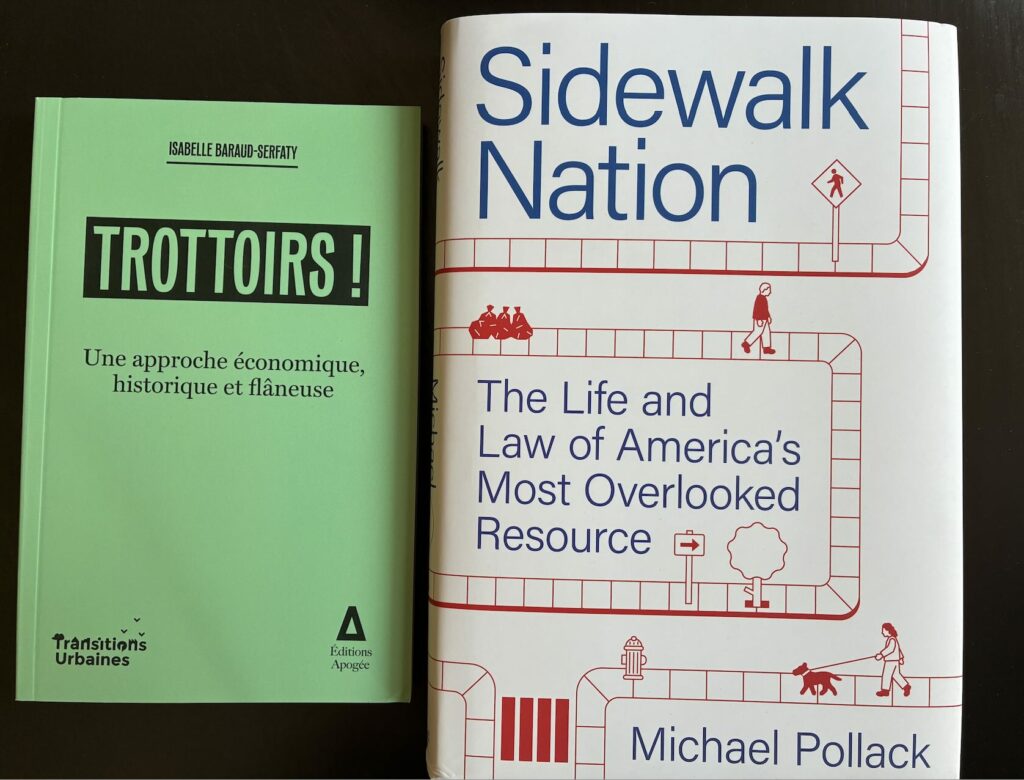
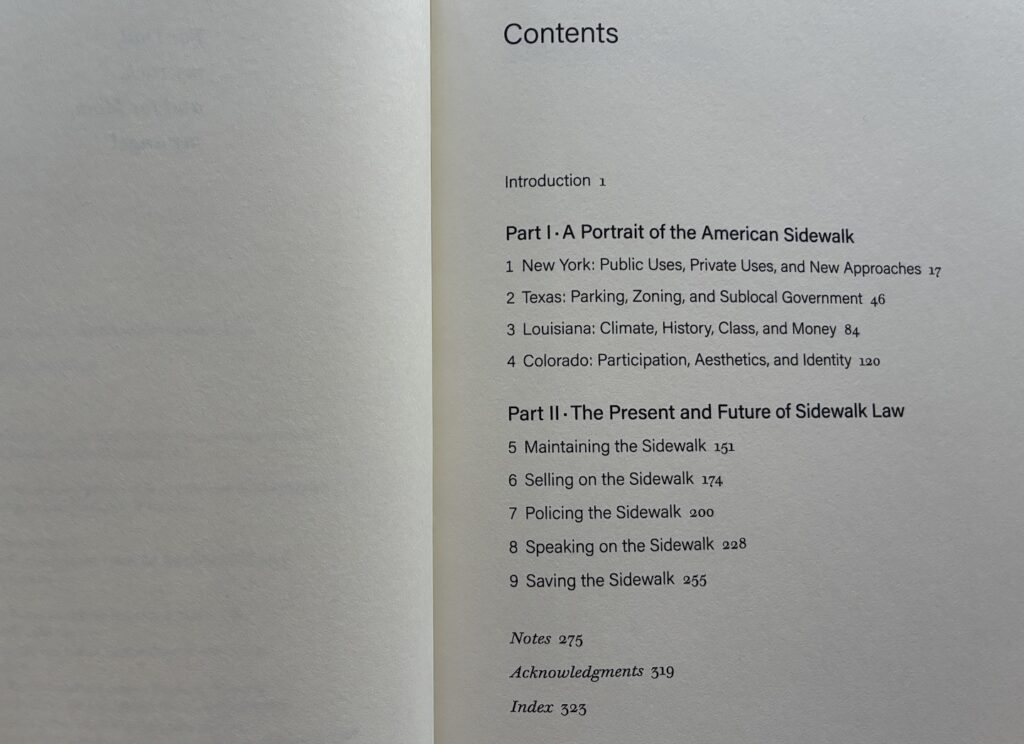
2ème de couverture :
« PUBLIC INFRASTRUCTURE IS AS ESSENTIAL to our communities as it is easily overlooked.
A case in point is the humble sidewalk: constantly taken for granted, yet linked to nearly every pressing issue of local governance in urban, suburban, and even rural areas. From commerce, taxes, and property rights to policing, homelessness, and surveillance; from free speech and socioeconomic equity to public health and climate resilience-sidewalks, surpris-ingly, are at the core of numerous major debates.
Sidewalk Nation offers a vivid travelogue spanning more than a dozen cities and towns across the United States to show how diverse communities are grappling with big challenges. Some are prosaic, if critical: How do we ensure that sidewalks facilitate mobility for disabled people? Whose job is it to clear snow from public space? And some touch on the most profound issues in law, including our rights under the First and Fourth Amendments. While traversing the country, Michael Pollack provides expert insight into the property, tax, and zoning laws that shape sidewalk management and land use more broadly. Offering a holistic vision for improving a vital resource, Pollack argues for reforms to ensure that local governments have both the obligation and the funding needed to give due attention to sidewalks and all that they offer.
Whether elected officials, civil servants, engi-neers, developers, or voters, everyone has a stake in the question of where sidewalks should be placed and how they should be used. Indeed, as Sidewalk Nation makes clear, what’s under our feet should be at the front of our minds as we decide how to build, regulate, and protect our neighborhoods ».
Et aussi : les nouveaux trottoirs de New-York :

Post instagram : source
« Get Sheds Down » est un programme lancé en 2023 pour lutter contre l’“épidémie” de sheds qui encombraient les trottoirs new‑yorkais. En effet, si un bâtiment présente un risque — fissures, pierres instables, corniches fragiles — le propriétaire doit installer un shed (ou sidewalk sheds) immédiatement. Le problème est que, pour les propriétaires, louer un shed coûtait moins cher que réparer la façade. D’où le fait que les sheds devenaient permanents ». (Merci CS pour le signalement)
Plus de précisions sur le billet « Miscellanées sur le trottoir »